


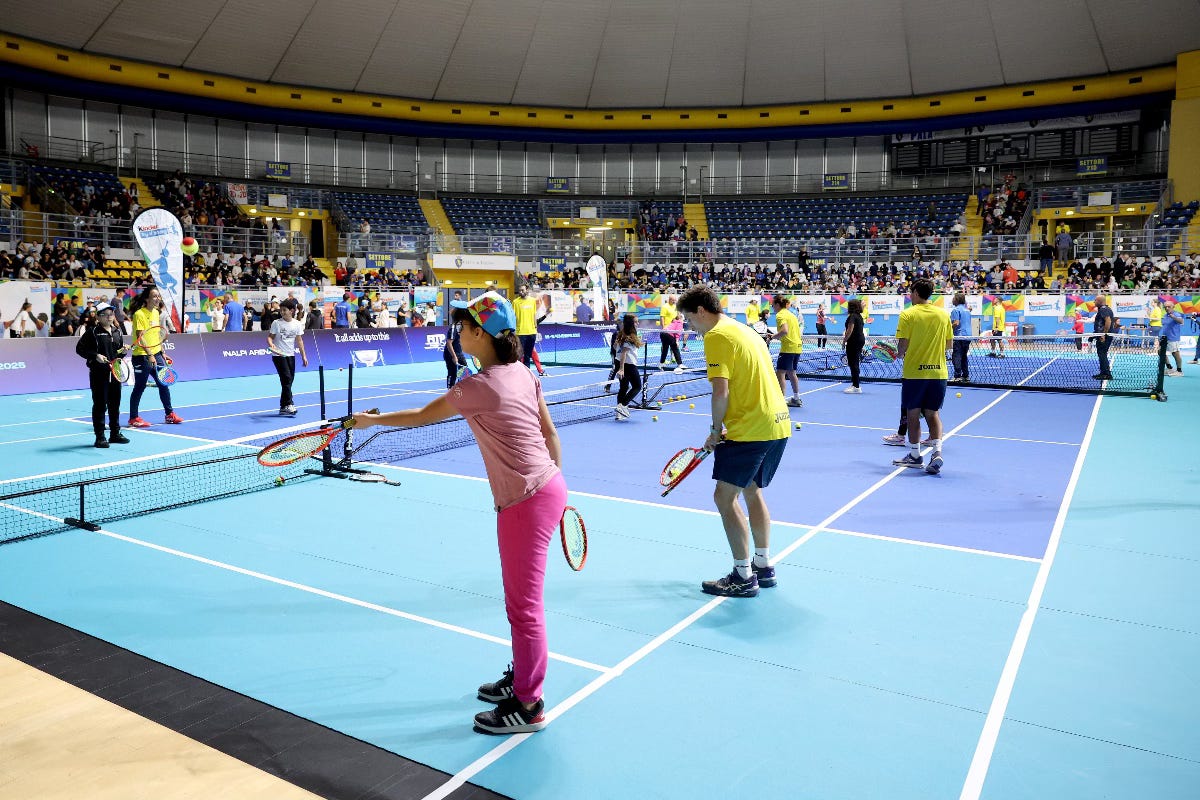
In recent years, Italian tennis has experienced a true revolution. Today, Italy can boast a group of players among the world’s best – with more than ten Italians in the ATP Top 100 and regular names at the very top of the men’s world rankings – a result that would have seemed unimaginable just fifteen years ago.
A Journey Built with Method
The secret to this success is no accident: it has deep roots. About a decade and a half ago, the Italian Tennis Federation (today FITP) began investing decisively in so-called tennis schools – facilities dedicated to developing young players, with qualified coaches, structured technical and physical programs, and a network of youth tournaments across the country. Examples include competitions such as the Kinder Circuit and the Coppa delle Province, which range from local to national levels. Then there are regional aggregation centers, where promising children and teenagers are carefully monitored, as well as summer camps where young players can enjoy the sport while learning. Not to mention all the initiatives carried out off the tennis court, such as the “Racchette in classe (Racquets in the Classroom)” project. Over the years, this program has become firmly established within the Italian school system and now involves an ever-growing number of participants, with the aim of promoting physical activity and the culture of racket sports from early childhood.All of this has given rise to a generation of athletes raised in a structured environment, with skills and stimuli at an international level from the earliest stages of their development.
Numbers That Speak for Themselves
The trend is impressive. The total ATP points collected by Italian players in the Top 100 has steadily increased, from a few thousand to over 22,000 points in 2023‑24, a clear sign of the depth and competitiveness of the movement.
At the beginning of 2025, Italy reached a new milestone: for the first time in history, there are 11 Italian players in the ATP Top 100, making our nation the one with the most players in this elite global tier.
From Promises to Leading Players
The spearhead of this revolution is Jannik Sinner, who has risen to the top of the world rankings and has already won 4 Grand Slam titles – a historic achievement for Italian men’s tennis. But he is not alone: other young players such as Lorenzo Musetti, Flavio Cobolli, Luciano Darderi, Matteo Arnaldi, and Luca Nardi are steadily breaking into the Top 50‑100, demonstrating the depth of the new generation.
We must also recognize the contribution of Fabio Fognini, who paved the way, and Matteo Berrettini, the first Italian in history to reach the Wimbledon final. The crowning achievement is Italy’s three consecutive Davis Cup victories over the last three years, a sign that the entire movement has established itself among the world’s tennis elite.
Italian women’s tennis has also made its mark, with several players consistently in the WTA Top 100 and notable performances at major tournaments – proof of a complete and growing movement in the “women’s” sector as well.
The Foundations of a Winning Project
The new glory of Italian tennis is the result of strategic vision and long-term investment:
Development of tennis schools and talent centers, with trained coaches and high-level programs;
More tournaments across the country, from under-age competitions to ITF and Challenger events and up to ATP and WTA tournaments, giving young players frequent real-world competition experience;
A multidisciplinary approach, including specific physical training, mental preparation, and support to manage the pressures of modern competitive tennis;
A sports culture that has grown with the results: tennis has become one of Italy’s most-followed sports, with millions of players and fans inspired by the top champions.
A Domino Effect of Enthusiasm and Participation
International success has had a huge social impact. The presence of many Italian champions at the top of world tennis has sparked young people’s interest, increased club memberships, and made tennis a sought-after sport in many families. Numbers speak for themselves: the number of registered players grew from 130,000 in 2001 to 473,000 in 2021, reaching one million in 2024. Tennis is no longer “an elite luxury,” but a discipline in which many children see a real career opportunity, thanks to a system that supports them from childhood.
The Future? Sustaining the Movement
The results achieved are extraordinary, but the challenge now is to turn them into continuity: consolidating development pathways, maintaining the quality of youth competitions, expanding the player base, and continuing to innovate training methods. The path paved so far shows that, with vision and consistency, a movement can transform from a mere participant into a protagonist on the world stage.